


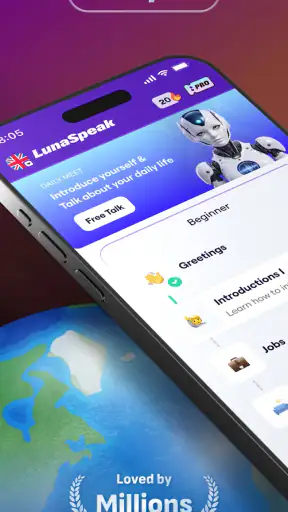
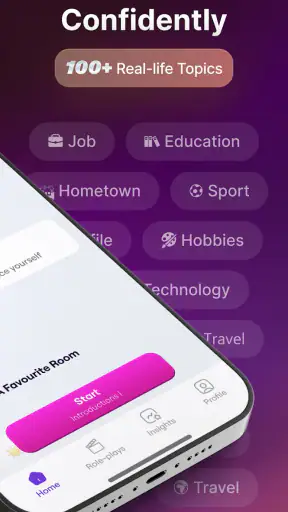

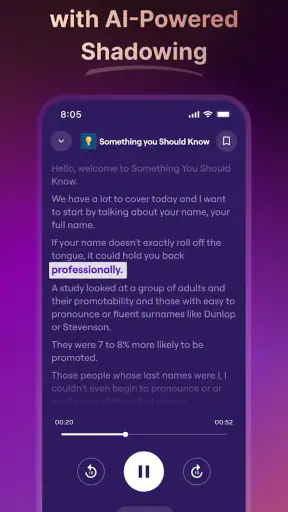
I came away from LunaSpeak: AI Speaking Coach with a fairly clear view of what it is trying to solve: the uncomfortable gap between knowing English and actually opening your mouth to speak it. As an Education app from Growly, it focuses on spoken practice with Luna, an AI language coach, rather than presenting itself as a broad course for every part of language learning. That narrower purpose is its biggest strength. If you already understand basic English but hesitate in conversations, this is much more relevant than another endless vocabulary drill.
My overall opinion is positive, with one important condition: you need to treat it as a practice partner, not as a complete replacement for a teacher, a real conversation group, or structured grammar study. The app is free to start, available to an Everyone audience, and has reached over five million installs with an average rating of 4.5 from around 6.2 thousand ratings. Those figures suggest that its simple idea has connected with a substantial number of learners, but popularity alone does not remove the need to use it in the right way.
What makes LunaSpeak useful in everyday English practice
The most convincing part of the experience is the reduced pressure. Speaking to another person can make even a familiar sentence feel difficult, especially when I am worried about pronunciation, pauses, or choosing the wrong tense. An AI coach changes that social risk. I can try an answer, make a mistake, and try again without feeling that I am holding up a class or embarrassing myself in front of a fluent speaker.
That matters because speaking ability is partly a habit. Reading explanations about conversation is not the same as producing words quickly. LunaSpeak is built around that production step. Instead of silently recognizing a phrase, I have to retrieve it and say it. For someone who spends most of their study time with written exercises, this shift can expose a very useful problem: the words may be familiar on screen but unavailable during a real exchange.
I found the app most appealing as a low-friction companion for short sessions. It fits naturally into moments when I would not organize a full lesson, such as before work, after dinner, or while preparing for an upcoming conversation. The value is not that every session becomes a complete English class. The value is that speaking practice becomes easier to begin.
A realistic example would be a learner preparing for a short meeting with an international colleague. Rather than memorizing isolated phrases, I would use the app to rehearse an introduction, explain a delay, ask for clarification, and respond to a simple follow-up. The useful part is the sequence: I am practicing the transition between ideas, not just collecting expressions. Afterward, I would write down the two or three moments where I hesitated and repeat those answers instead of starting a completely unrelated lesson.
That workflow is more effective than treating every correction as something to admire and forget. I recommend keeping a small personal list of recurring problems, such as missing articles, overly long pauses, or relying on the same safe verbs. Then I would deliberately bring those problems into the next spoken session. An AI coach can provide opportunities, but the learner still has to notice patterns and decide what deserves another attempt.
Where the AI format beats familiar alternatives
Compared with flashcard apps, LunaSpeak addresses a different stage of learning. Flashcards are excellent for remembering words and phrases, but they rarely recreate the pressure of building an answer in real time. Compared with grammar-focused apps, it puts less emphasis on selecting a correct option and more on expressing an idea. Compared with a private tutor, it is easier to access and less intimidating, although it cannot offer the same human judgment, cultural context, or personalized teaching relationship.
It also occupies a useful middle ground between studying alone and joining a live speaking club. A conversation group gives richer unpredictability, but it can be difficult to schedule and may be uncomfortable for a shy learner. LunaSpeak offers a more controlled place to build confidence first. Once a learner can answer comfortably in the app, the next step should be testing those skills with real people, where interruptions, accents, and unexpected wording create a different challenge.
The comparison is not entirely in the app’s favor. A structured course is usually better for learners who need a clear progression through grammar, reading, listening, and writing. A teacher is better when a mistake has several possible causes or when a learner needs an explanation tailored to their first language. LunaSpeak makes the most sense when speaking is the bottleneck, not when every part of English needs equal attention.
How I would use it instead of merely opening it
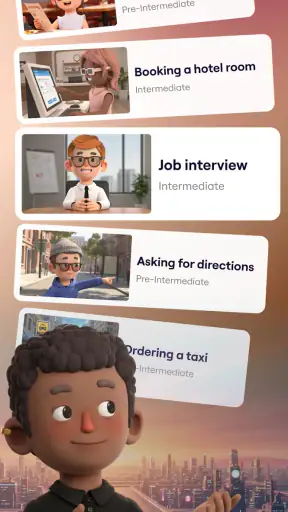
I would begin each session with a concrete purpose. “Practice English” is too vague, while “explain my weekend in five sentences” gives the conversation a target. Other useful prompts include describing a work task, asking for directions, making a polite complaint, or explaining an opinion without translating every sentence from my native language.
After the first attempt, I would repeat the same topic with one change. For example, I might first describe a restaurant, then explain what I would recommend to a friend, and finally say what I would change about the experience. This forces flexible language use. It is a better test of progress than repeating one memorized response until it sounds smooth.
Another practical tip is to separate fluency practice from accuracy practice. On the first pass, I would prioritize finishing the thought without stopping for every small error. On the second pass, I would focus on one issue only, such as past-tense endings or sentence openings. Trying to fix pronunciation, grammar, vocabulary, and speed at the same time can make a short session feel like an exam and reduce the willingness to speak.
I would also use the app before a real event, not only after making mistakes. A learner preparing for a phone call can rehearse the opening and likely questions. Someone traveling can practice asking for help, confirming a reservation, or explaining a dietary need. The benefit comes from lowering the number of decisions required in the moment. It does not guarantee a perfect conversation, but it can make the first sentence easier to say.
The limitation that should shape your expectations
The central weakness is built into the format: an AI speaking coach is not a human conversation partner. Even when an exchange feels smooth, it may not reproduce the interruptions, unclear phrasing, regional accents, emotional reactions, or social cues found in ordinary conversation. A learner who practices only with a predictable digital partner may feel confident in the app and still struggle when another person changes the subject unexpectedly.
There is also a risk of chasing a polished response rather than developing spontaneous communication. If I repeat a scenario until every answer sounds neat, I may be training performance for that scenario instead of learning how to recover when I forget a word. The better approach is to intentionally vary the wording, shorten an answer, add a reason, or ask for clarification. Real fluency includes repairing a conversation, not just delivering a clean sentence.
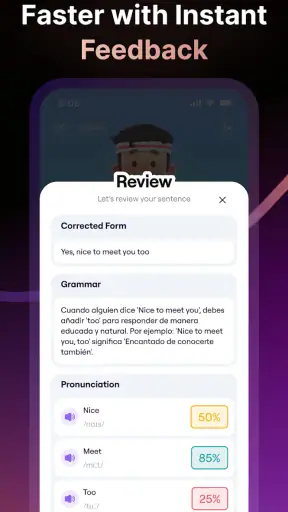
Feedback from an automated coach should be treated as guidance rather than an unquestionable verdict. Language has context, and a phrase can be understandable without being the most natural choice. If a correction feels surprising, I would check it against a trusted dictionary, a grammar reference, or a teacher instead of assuming that every suggested change is essential. This is particularly important for learners working toward formal exams or professional communication, where precision and register matter.
The pricing model is another point to consider before building a long-term routine. The app is free to download and use as a free product, while in-app purchases range from around twenty dollars to around seventy dollars per item. That does not automatically make it poor value, but it means I would first establish whether the speaking format suits my learning style. A paid plan is more sensible after I have used the available experience consistently and know that I will return to it.
Device compatibility is also worth checking before planning a study routine. LunaSpeak supports Android versions from 7.0 onward, which covers many older devices, and the current version is 1.6.6. I would still keep the app updated when possible, especially for a tool that depends on interactive conversations. More importantly, I would make sure my phone setup is comfortable for speaking: a quiet corner, a usable microphone, and enough privacy to answer aloud without constantly lowering my voice.
Who will get the most from it
I think LunaSpeak is best for lower-intermediate and intermediate learners who can understand common English but do not speak often. It is also a good match for people who feel self-conscious in group classes, travelers preparing for basic interactions, remote workers who need more confidence in meetings, and busy learners who prefer several short practices over one scheduled lesson.
It can help beginners too, particularly those who need encouragement to start speaking. However, a complete beginner may need additional support for basic vocabulary, pronunciation explanations, and sentence structure. If every prompt feels incomprehensible, the app may become frustrating rather than motivating. In that situation, I would pair it with a beginner course or teacher and use the speaking coach for carefully chosen, simple topics.
I would not make it my first choice for someone whose main goal is advanced academic writing, detailed grammar mastery, or exam preparation. It is also not ideal for a learner who dislikes speaking aloud or expects an app to correct every weakness automatically. Those users may gain more from a structured program, feedback from a qualified teacher, or a combination of reading, listening, writing, and live conversation.
Parents should also remember that an Everyone age rating describes broad content suitability, not a guarantee that the app teaches every child effectively. A young learner may need an adult to help choose topics, interpret feedback, and maintain a balanced routine. The app’s conversational format can be approachable, but learning results still depend on attention, repetition, and guidance.
Small habits that make the practice more valuable
I would keep sessions focused rather than trying to cover an entire life story each time. One topic, one speaking goal, and one correction target are enough for a useful practice. At the end, I would say the improved version once more without reading notes. That final attempt helps turn feedback into something active instead of leaving it as a passive observation.
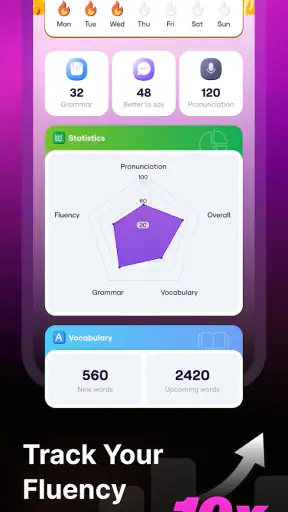
Recording personal progress outside the app can also reveal changes that are hard to notice day by day. I would occasionally write the same short answer in my own notes and compare how easily it comes out after a week or two of regular practice. I would pay attention not only to mistakes but also to pauses, sentence length, and the ability to continue after forgetting a word. Those are practical signs of becoming more comfortable.
For vocabulary, I would avoid collecting every unfamiliar word that appears. Instead, I would select expressions that I genuinely expect to use. If I work in customer support, I might focus on clarifying a request and confirming the next step. If I travel, I might prioritize polite questions and problem-solving phrases. This keeps the speaking practice connected to real needs and prevents the app from becoming another place where I accumulate lists without using them.
The strongest routine would combine LunaSpeak with real listening and human interaction. I would listen to natural English, practice with the AI coach, and then use one or two of the same ideas in a real conversation. Each setting exposes a different weakness. The app provides repetition, media provides variety, and people provide unpredictability. Relying on only one of those sources would make my preparation less complete.
My final recommendation
After weighing its convenience against its limits, I see LunaSpeak as a focused tool with a clear purpose rather than a universal English solution. Its best contribution is making spoken practice less intimidating and more available between formal lessons or real conversations. Growly has positioned it in a part of language learning that many traditional study apps underemphasize: producing language when there is no script to copy.
I would recommend trying it if your biggest problem is hesitation, especially if you already know enough English to form basic thoughts but rarely say them aloud. Start with practical situations, repeat topics with changed wording, and use feedback selectively. Do not judge the app by whether it makes every conversation effortless; judge it by whether it helps you speak more often and recover more calmly when your English is imperfect.
I would skip it as a main learning platform if you need a complete curriculum, advanced human correction, or exam-specific instruction. For everyone else, the free entry point makes experimentation reasonable, while the paid items deserve a more careful decision based on regular use. My verdict is that LunaSpeak: AI Speaking Coach is worth adding to a broader study routine when speaking confidence is the missing piece, provided you eventually take that confidence beyond the screen.


